Roasted
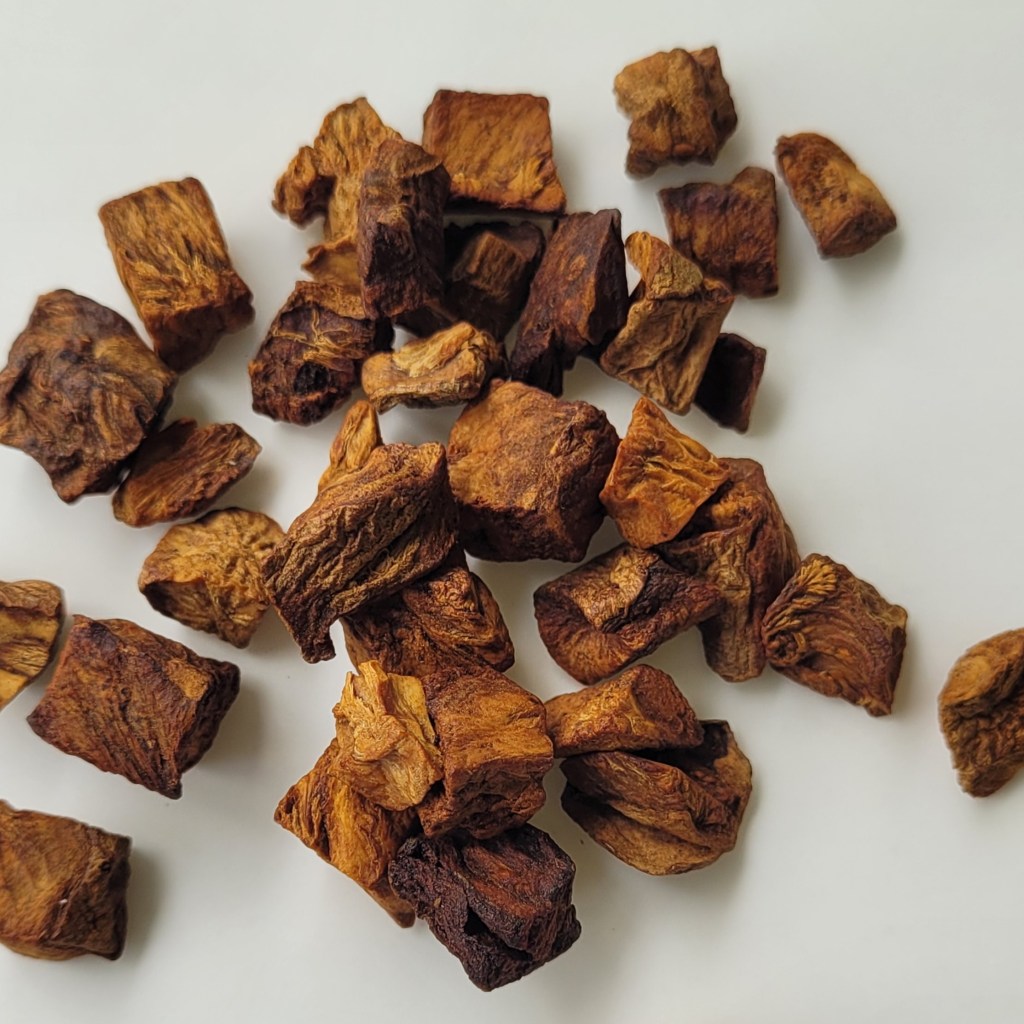
For centuries, chicory root’s long taproot has been harvested to make a hot beverage, especially during times when coffee beans were scarce. The French added it to coffee to subdue the effects of caffeine, apparently not being ones to enjoy the Arbuckle thumps.

The chicory plant’s bright blue flowers garnered it the name ‘blue dandelion,’ and it is in fact a cousin to the dandelion.
Chicory root contains oligofructose and inulin, two forms of soluble fiber that serve as a prebiotics to encourage the colonization of “friendly” bacteria in the gut. In fact, chicory contains the highest concentration of inulin that any other plant known. The herb is also a good source of vitamin C.
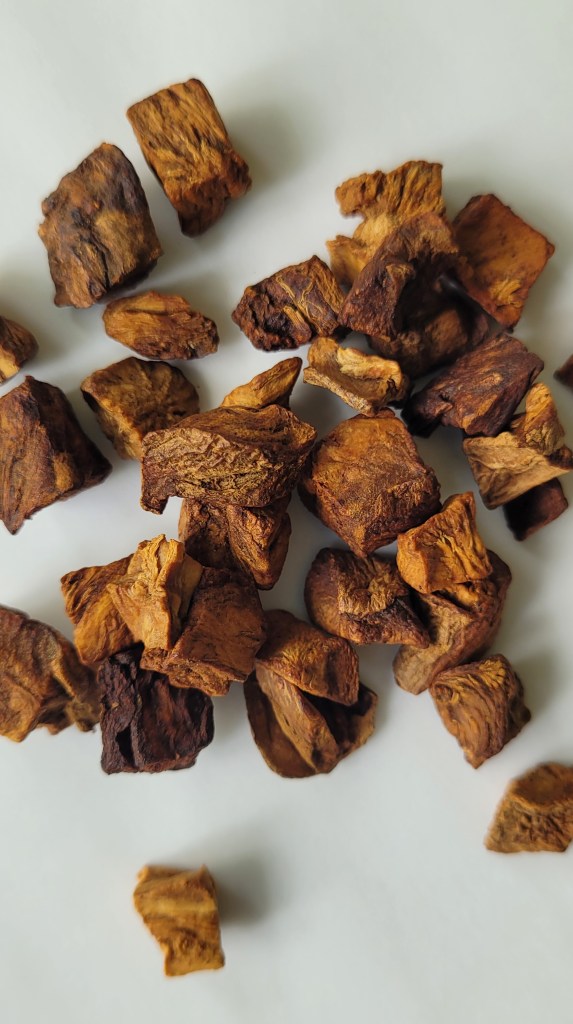
Typical preparations of roasted chicory root include decoctions, extractions, and infusions. It has a dark color and an earthy, robust flavor similar to coffee. In tea blends, chicory root pairs best with bold, green teas.
Cosmetic uses: A strong brew can be used to “tea stain” fabrics or to help mask gray in dark shades of hair.
Culinary uses: Add to tea blends or brew as a coffee substitute. Brew as you would coffee grounds for a caffeine-free beverage.
Avoid long-term or high consumption of this herb if you have a history of gallstones. Be aware of possible allergies and cross-reaction, particularly in those who are already allergic to latex, birch pollen, and members of the Compositae family, such as lettuce and endive, marigolds, daisies, and chrysanthemums.
We recommend that you consult with a qualified healthcare practitioner before using herbal products, particularly if you are pregnant, nursing, or on any medications.
 Yuma Herb and Spice Shop